A Simple Memory Game Template for Any Theme
Memory Game Mastery: A Flexible Tool for Young Learners
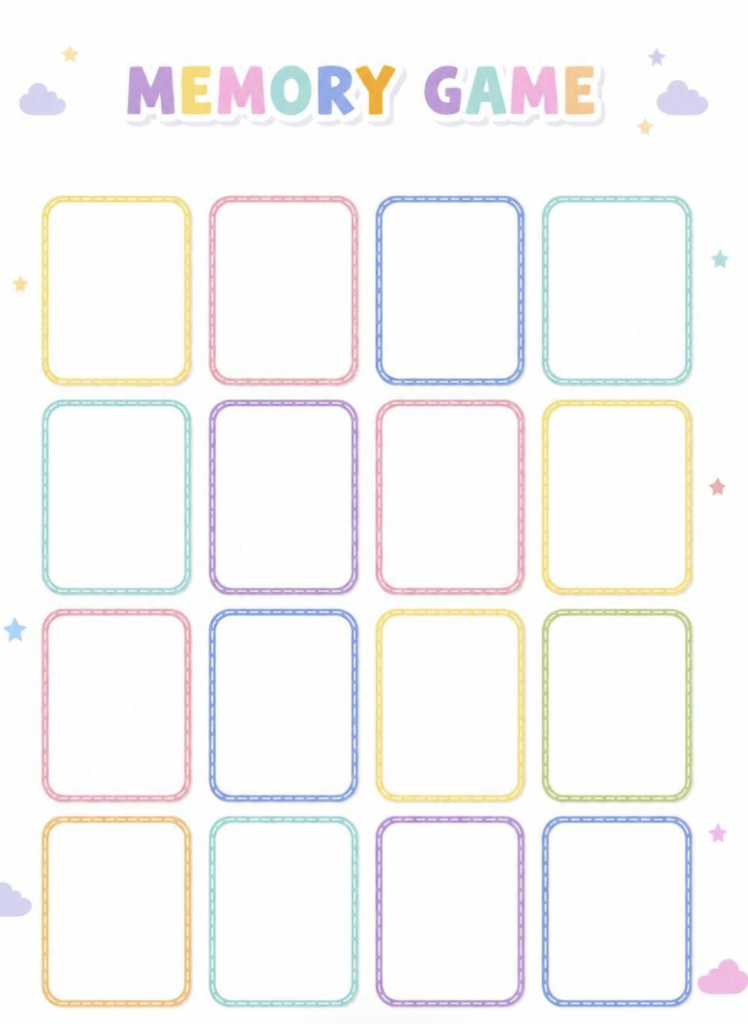
In my experience teaching children between the ages of 5 and 8, the most effective learning moments often happen when students do not even realize they are learning. We focus so much on direct instruction like tracing letters, reading phonics, and writing sentences that we sometimes overlook the power of games to solidify those concepts. A well-designed memory game is not just a way to kill time at the end of a lesson; it is a serious cognitive workout disguised as fun. Today, I am sharing a custom-designed Memory Game template that I use regularly, which consists of a base Game Pad and a separate set of customizable Matching Cards.
The Anatomy of the Game
This system is built on two distinct parts: the Memory Game Pad and the Matching Card template. The pad serves as the foundation. It provides a structured, visual grid that organizes the play area, which is incredibly helpful for younger children who might struggle with loose cards scattered across a table. When the cards have a designated home on the pad, the game feels more professional and organized.
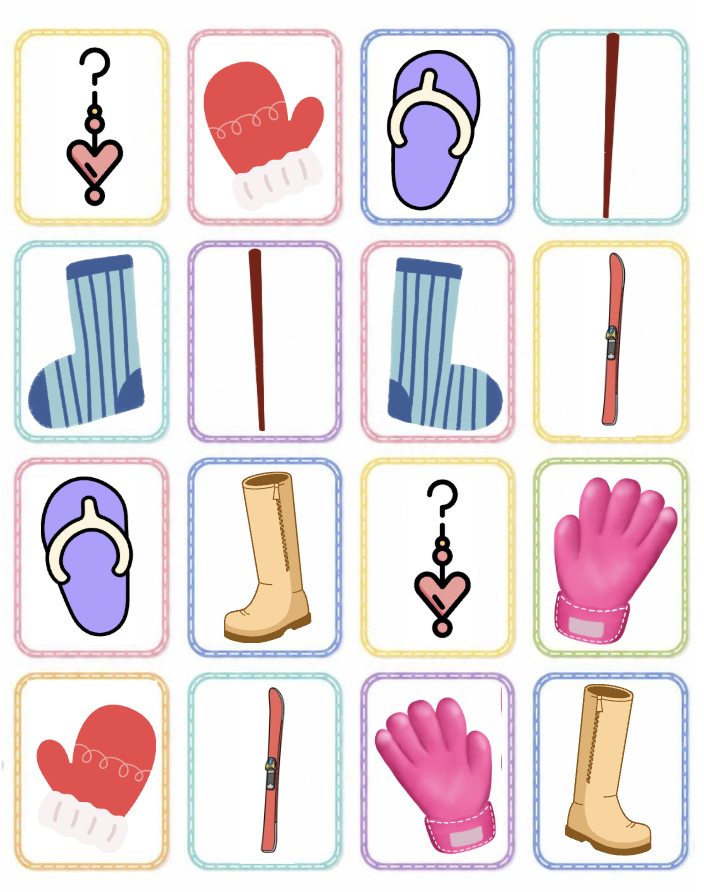
The cards themselves are separate, allowing you to create any set of pairs you need. When I first used this, I wanted to teach winter-themed vocabulary, so I filled the cards with images of boots, gloves, skis, and socks. The process of searching for the pair turns a vocabulary lesson into a tangible search-and-find challenge. This visual-spatial connection helps children retain words far better than simple rote memorization.
Teaching Grammar Naturally
One of the most powerful ways I use this game is to sneak in grammar practice without it feeling like a lesson. I use it to help students naturally understand the difference between singular and plural forms. For instance, when a student finds the first matching card, I encourage them to say, “a ski.” Then, when they find the second card and complete the pair, we celebrate by saying, “skis!”
This approach takes the abstract rule of adding an ‘s’ and makes it a physical, tangible experience. They aren’t just memorizing a grammar chart; they are feeling the difference between one object and two. It is a natural, low-pressure way to help them hear and understand the difference between singular and plural forms while they are focused on the excitement of the game.
Why This Activity Builds Stronger Minds
Memory games are a foundational exercise for cognitive development in early childhood. When a child flips over a card, looks at the image, and then flips it back, they are actively engaging their working memory. They must hold that visual information in their mind, map it to a specific location on the pad, and then attempt to retrieve it when they find the matching pair later. This is not easy work for a developing brain.
Beyond memory, this game is excellent for categorization. In my lessons, I often use the cards to teach the concept of pairs. Many children know what a glove is, but understanding the relationship between two individual items that belong together is a higher-level conceptual skill. Whether it is matching items like socks or skis, the game teaches children to look for commonalities and define relationships between objects. This categorization skill is the bedrock of logical thinking and early scientific reasoning.
Customization: A Canvas for Every Lesson
The reason I keep returning to this template is that it is completely customizable. You are not locked into the winter theme I started with. The card template serves as a blank canvas, and I encourage you to see it that way. If you are teaching a unit on animals, you can easily insert illustrations of different species. If you are doing a phonics lesson, you can use the card template to pair uppercase letters with lowercase ones, or letters with their corresponding starting-sound images.
The flexibility is the real value here. You can swap out the graphics, print a new set, and you have an entirely new lesson in less than ten minutes. For teachers or parents juggling a busy schedule, having a reliable game format that can adapt to any subject matter is a massive time-saver. You can even print these on cardstock and laminate them to create a reusable resource that will last through the entire school year.
Teacher Tips for Maximum Engagement
To get the most out of this game in a classroom or home setting, I have found that you need to go beyond the simple mechanics of matching. The game should be a bridge to spoken language. I always encourage my students to say it to play it. When a child flips over a card, they must name the object out loud. If they flip a ski, they say “Ski!” before they look for the matching pair. This small vocalization is crucial. It forces the child to retrieve the vocabulary word from their brain every single time they interact with the game, which significantly accelerates language retention.
Additionally, do not be afraid to adjust the difficulty. For younger children, you can start with a smaller number of pairs, perhaps filling only half of the memory pad. As their confidence and concentration improve, you can increase the number of cards until the entire pad is full. Observing the children’s progression is part of the fun. You will notice that their strategy changes from random flipping to systematic observation. They start to remember where the tricky cards were located, which shows their spatial awareness is developing.
This tool is simple, but its effectiveness is backed by how much the children enjoy the process. It removes the pressure of formal testing and replaces it with the thrill of discovery. I hope this template makes your lesson planning a little easier and adds a spark of joy to your classroom routine.
You can download the game pad and the card template below.
Why This Activity Works
This activity does more than just pass the time. It develops working memory as children track the location of cards they have already seen. It also reinforces categorization skills, helping them understand how items relate to one another in the real world.
Make It Your Own
The best part is the flexibility. The card template is a blank canvas. You aren’t limited to my winter theme; you can easily insert illustrations of animals, shapes, colors, or alphabet letters to match whatever your students are currently learning.
Teaching Tips for Better Results
To get the most out of this, I always have my students name the object out loud as they flip the card. If they flip a “boot,” they say “Boot!” before they look for its pair. This simple act bridges the gap between image recognition and spoken vocabulary. Consistency in these small interactions is what really makes the learning stick.
I hope this template makes your lesson planning a little easier. You can download the pad and the card template below.
[Download Memory Game Pad] [Download Card Template]
© 2026. All rights reserved. For personal and classroom use only.